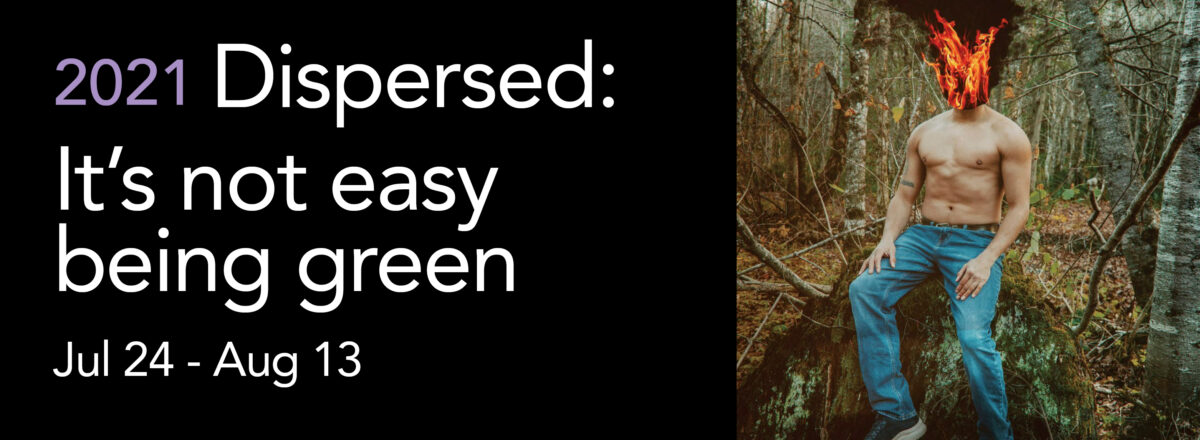
2021: Dispersed
It’s not easy being green

Curated by Jeffrey McNeil-Seymour + SD Holman
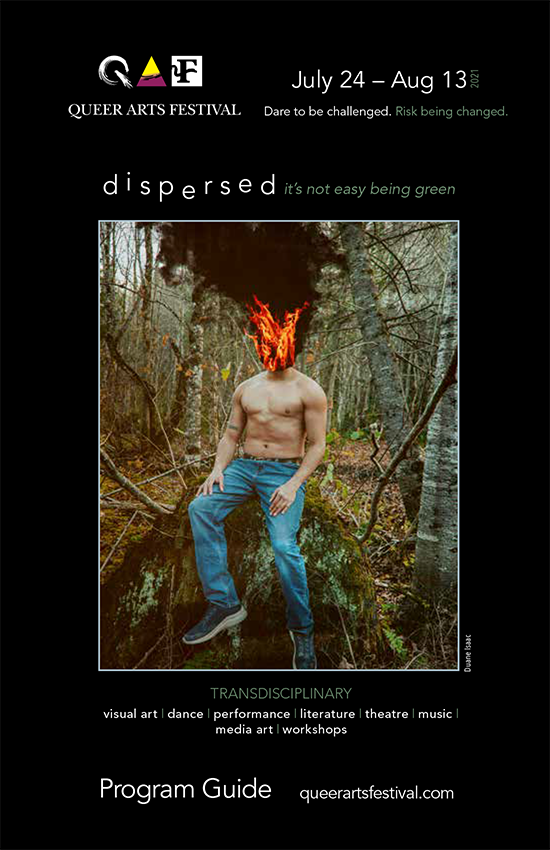
QAF shows artists upcycling & recycling apocalyptic fear & dread into art & social change. Green symbolizes not only our relationship to each other & the lands we occupy, but also difference & marginalization, exemplified by popular culture green underdogs Elphaba the Wicked Witch of the West & Rainbow Connection, Kermit the Frog. It’s not easy being green, fighting for a world that consistently rejects us. With imminent climate catastrophe upon us, we witness the world grappling with the end times, but when were the queered privy to life outside the apocalypse? 

Green is the complex terrain of extended kinship ties of Indigiqueer/two-spirit and queer settlers. Green spectrals haunt the hyphened margins of the subaltern; enduring perpetually frequent gaslighting(s) of post-traumatic settler-colonial and concurrent disorders. Together/apart WE endure our own private apocalyptics. Cataclysmic temporal end-points that exist as seemingly fixed and an unavoidable global terminus – from which Indigiqueer/queer resurgence erupts relentlessly into the ongoing colonial.

QAF shows artists cast as see-ers/oracles/alchemists upcycling/rebranding/reclaiming/transgressing/transforming apocalyptic visions towards queer utopic landscapes, transmuting fear, dread and a collective broken heart of forced disslocations with departures and arrivals, using art as transformative praxis and practice towards social and spiritual metamorphoses.


2021 Events

Piano Burning

Sun Oct 24 | 5pm Transdisciplinary music performance | Mountain View Cemetery Rising from the ashes of this summer’s fire ban, QAF and Full Circle: First Nations Performance will reignite our Piano Burning event on Sunday, October 24 at Mountain View Cemetery. Curated by SD Holman and Margo Kane, Annea Lockwood’s infamous work — where […]

ArtParty!

Sat July 24 | 7- 10 pm Festival Opening | SUM & Sun Wah 268 Keefer ArtParty! returns in-person for the first time since 2019! Regarded as one of Vancouver’s best-attended visual art events, ArtParty! marks the opening night of QAF’s signature Curated Visual Art Exhibition and kicks off it’s not easy being green’s impressive […]

QAF 2021 dispersed:

it’s not easy being green Jul 24 – Aug 13, 2021 QAF shows artists upcycling & recycling apocalyptic fear & dread into art & social change. Green symbolizes not only our relationship to each other & the lands we occupy, but also difference & marginalization, exemplified by popular culture green underdogs Elphaba the Wicked Witch […]

Curated Visual Art Exhibition

Sat Jul 24 – Fri Aug 13, from 12 – 6pm Visual Art Exhibition | Sun Wah 268 Keefer, Lower Ground Floor Featured Artists: Beric ManywoundsBlake AngeconebChad BabaDuane IsaacFalak Vasa Grace HouseHo TamIsaac MurdochJay PahreKali Spitzer Katherine AtkinsKathleen RossManuel Axel StrainOluseyepablo muñoz Preston BuffaloTejal ShahTsohil Bhatia The exhibition is open to the public and free […]

Language as a Virus: Queer isolation stories

Sat Jul 24- Fri Aug 13 Sonic Installation | around False Creek & Online  Language as a Virus: Queer Isolation Stories is an interactive multi-platform sonic-art installation from artist Bobbi Kozinuk, featuring publicly broadcasted radio programming around the False Creek area as well as online. Combining music, sound art, and community-submitted recordings, stories become soundscapes […]

Language as a Virus: The Tour

Mon Jul 26 | 5 pm Audio Art Tour | Roundhouse Community Arts Centre Roundabout Join artist Bobbi Kozinuk in an exploration of her work, Language as a Virus: Queer Isolation Stories. Language as a Virus: Queer Isolation Stories is an interactive multi-platform sonic-art installation from artist Bobbi Kozinuk, featuring publicly broadcasted radio programming around the […]

Curator Tour with Guest Artists

Tue Jul 27, 5pm Visual Art Tour | Sun Wah 268 Keefer, Lower Ground Floor Come together for our Visual Art Tour of our exhibition it’s not easy being green, with the curators Jeffrey McNeil-Seymour and SD Holman + guest artists.

Screen Greenery

Sat Jul 31 | 9 pm Media Art Screening | SUM & Sun Wah 268 Keefer Rooftop Curated by QAF Associate Artistic Director Fergie and Programs Coordinator Ben!  Rooftop screening of edutainment for the pandemic — very queer and rather green short films. Animation and environmentalism share a more than passing connection for many of us. […]

Queerotica

Mon Aug 2 | 8 pm Literary Readings | SUM & Sun Wah 268 Keefer Rooftop Curated by Josie Boyce, slip into a little green something and enjoy readings by Vancouverite writers. Queerotica is Apocalypterotica, in all the best possible ways. Survival through living your truth amidst the world wishing you wouldn’t. That’s us, singing, […]

Onibana Taiko and Alvin Erasga Tolentino

Sat Aug 7 | 8 pm Dance and Music Performance | Mountain View Cemetery *NEW* ONLINE | Tue Aug 10 | 24 hours When Japanese folk tradition meets punk, audience members are invited to commune with the ancestors via Obon dance, song, sensu (fan) cheerleading, fue, shamisen and kick-ass taiko. Please note: Due to the […]

Glitter is Forever

Fri Aug 13 | 7 – 10pm Closing Party | SUM & Sun Wah 268 Keefer Rooftop Join us for the festival closing with DJ O Show and your last chance to see all the art @ QAF 2021with us at the Sun Wah Centre, from the basement, to the SUM gallery, to the rooftop […]

Kindred Spirits

Sat Jul 24 – Fri Aug 13 Community Art Showcase | Online The digital culmination of the Kindred Spirits digital artist residency run by and for 2Spirit and Indigiqueer artists. Guided by Faculty members Dayna Danger, DJ O Show, Raven Davis and Art Auntie Shane Sable, this digital exhibition focuses on re-storying 2Spirit identities and […]

Pride in Art Community Show

Sat July 24 – Fri Aug 13, daily from 12 – 6pm Visual Art | SUM & Sun Wah 268 Keefer, 4th Floor The exhibition is open to the public and free to view in the SUM gallery (4th floor) of the Sun Wah Centre for the duration of the festival, open Tue – Sat […]

Pillows for the Pandemic

Wed Jul 28 | 7:30 pm Workshop | SUM gallery or Online Falak Vasa leads us in a pillow-making workshop, based off of their own series of pillows created during the ongoing COVID-19 pandemic offering small comforts that are controllable.  This event is ASL Interpreted. Artist Statement This workshop is about comforts. What makes you […]

Queerer than Queer: Lessons from Nonduality for Deep Planetary Healing

Thu Aug 5 & Fri Aug 6 | 7pm Workshop | Online “Now, my own suspicion is that the universe is not only queerer than we suppose, but queerer than we can suppose.”~ JBS Haldane in his 1927 essay, Possible Worlds In this two-part interactive workshop we will explore the fine line between what we conventionally consider […]

Gathering of Wishes and 1000 Paper Butterflies

Phase 1 of Mass Reincarnation of Wish Fragments 願片大量転生 (Ganhen Tairyou Tensei) Workshop | Wed Aug 4, 6pm | SUM gallery & Online With Artists: Naoko Fukumaru and Eva Wong An ancient Japanese folk tale promises that anyone who folds 1000 paper cranes will have their wish answered by the gods. In this project, these […]
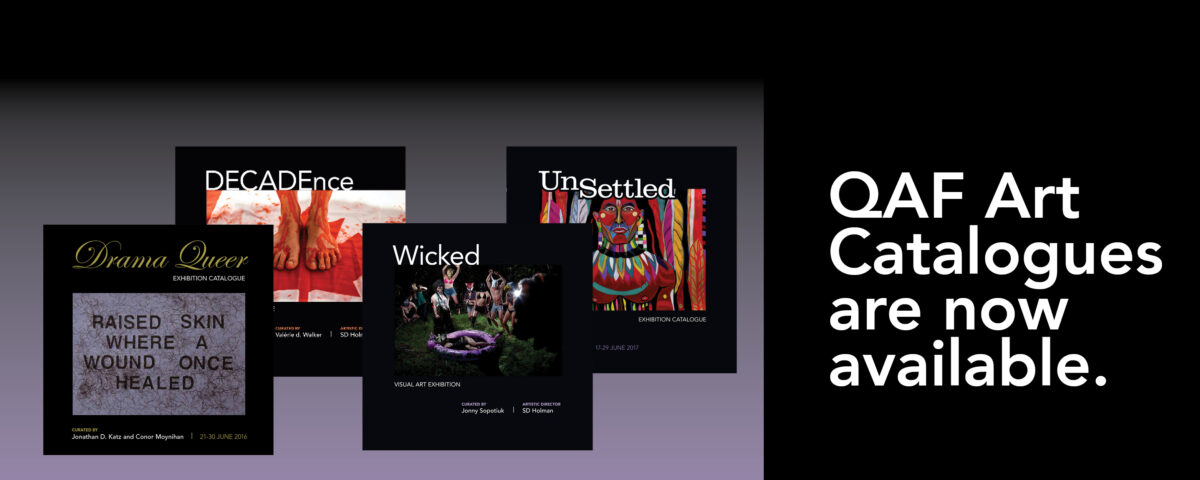
Catalogue Carousel

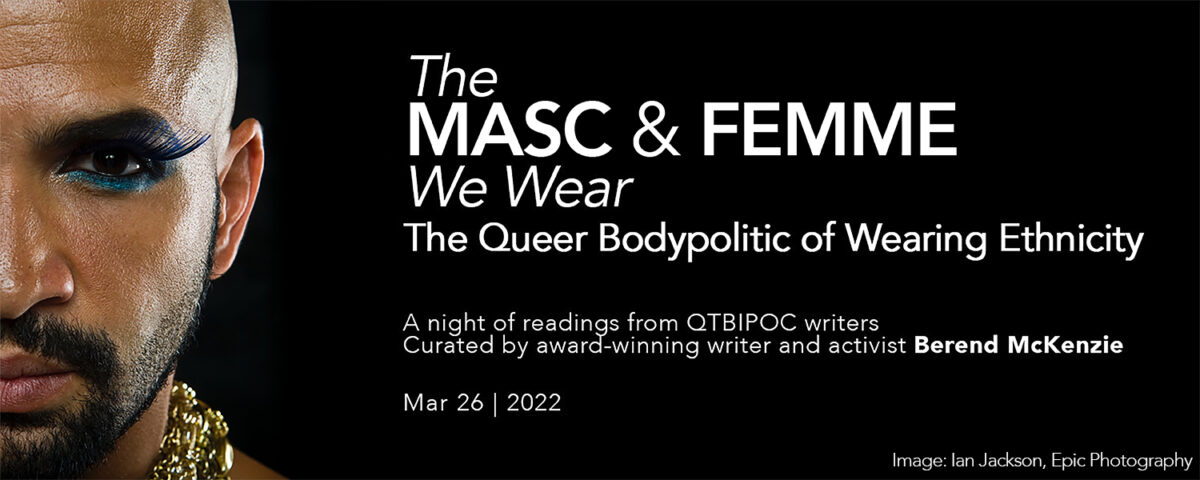
THE MASC AND FEMME WE WEAR—A NIGHT OF READINGS FROM QTBIPOC WRITERS

Let us love: The ‘Sun Comes Out’ at Portland Opera

Queer-themed Canadian opera makes U.S. premiere at Hampton Opera Center

FEBRUARY 2, 2022

BYANGELA ALLEN, OREGON ARTSWATCH

When the Sun Comes Out opened in 2013 in Canada, commissioned by the Vancouver Queer Arts Festival.

Now, a long eight years later, the new-music opera by Japanese-Canadian Leslie Uyeda with a gorgeous libretto by Canadian poet Rachel Rose, finally premieres in the United States. It opened Jan. 28 at Portland Opera’s Hampton Opera Center for six performances through Feb. 12. Five have sold out, though the day I went, the 154-seat space was at least a third empty. Many opera-goers may have decided to watch from home when the opera is available digitally on Portland Opera Onscreen for a limited time starting Feb. 25.

But the big question: Why do these eye-opening pieces take so long to reach us? In 2015, gay marriage was legalized in the United States. It was 2005 in Canada, and in 2002, the Netherlands pioneered it. Gay marriage is old news in the Western world, from a political standpoint, though the opera was written and sung in English. Of course there are more complex ramifications to gay marriage than legalization.

And in at least 65 other countries same-sex marriage remains a crime, many times a death sentence. And that’s what this opera is all about — and it’s about love being blind to politics: love is love, even more if you have to fight for it.

The Hampton’s intimate Hinckley Studio Theatre can be reconfigured for different shows, and this one, with the audience on three sides, left the stage to the performers. Only a pile of pale furniture morphed into a table here, a bed there. The five musicians and conductor were tucked away in a corner.

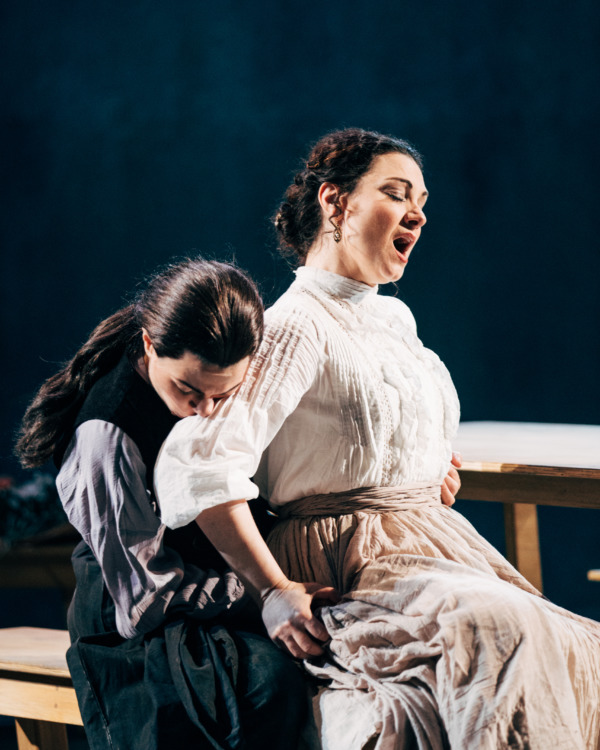
Christine A. Richardson’s simple white and beige costumes (other than the rugged mannish one worn by the intense, plucky Solana performed by soprano Cree Carrico) and Cynthia Felice’s set were neutral, indicating a lack of place other than the inside of a home, perhaps a reference to Covid’s claustrophobia. Still, there was a shawl that turned into a head scarf for Lilah (mezzo Sandra Piques Eddy), the woman who now has a child and is desperately sought out again by Solana after an affair three years earlier.

So perhaps that head scarf and mention of lemon trees in Lilah’s courtyard were clues to the setting, though the symbolism did not hit you over the head. In contrast, Solana was dressed like a Canadian explorer — hat, staff and shoulder bag. The suspenders on the two men’s costumes were a nice touch. The detail gave off a pioneer vibe, and in this opera, there are pioneers. This is a country-less, timeless piece.

As much as I adored the poetic libretto loaded with images and metaphor about two very different women— Solana comes off as daring, dangerous, brave and fickle; Lilah is a wealthy (her emerald jewels are mentioned), obedient wife and mother— who fall for each other in an unknown country where gay sex is criminalized, I was not overwhelmed by the opera. 

The music falls into the category of new music, with distinctively Asian touches, and tempos were notably uneven and melody uncommon. Many listeners’ ears are not tuned to those musical values, though others of us crave and embrace brave new operas. The five Portland Opera Orchestra principals who played (cellist Dylan Rieck, flutist GeorgeAnne Rieg, clarinetist Louis DeMartino, violinist Margaret Bichteler and pianist Sequoia) conducted by Maria Sensi Sellner were excellent despite the difficult score, and never overwhelmed the singers. At times, the subtle music vanished into a backdrop, and I wish I could recall more of it.

Two dancers–Sophie Beadie and Aaron Petite of Portland’s Shaun Keylock Company–reflected complex emotions, mostly comforting with their movements the performers’ angst, but sometimes enhancing their fury. Graceful and almost soundless, they were a welcome addition to the production, and very much a part of the show’s fabric, somehow sorting out searingly difficult feelings and memories.

Then about 50 minutes into the 80-minute opera, guess who appears? A man. This is no longer a lesbian opera if that’s what you were banking on.The story gets more interesting and the stakes go higher.

Baritone Michael Parham, plays the part of Lilah’s husband, Javan. And guess what? He has a vey big secret: He’s gay, too, and has named their beloved daughter after a favorite lover, Azhar, who was killed for homosexual behavior. (Javan has intense survivor’s guilt.)

Everyone is suddenly in the same boat, despite the jealousy and secrets, and they can kill each other off before the state does, or they can help one another to forge a new future. They choose the latter after much saber-rattling and knife-drawing, and an overwhelming reason is the child — the future, a factor that the stubborn Solana must accept. Lilah and Javan must accept a new family configuration with Solana. After all, the opera is called When the Sun Comes Out; its message is ultimately hopeful.

The opera picked up with the entrance of Parham, a former PO resident artist, who has a strong voice and weighty stage presence. He added his baritone to Carrico’s soprano and to Eddy’s lovely warm mezzo (she sings often at the Met and was praised profusely for her 2015 PO Carmen performance and for the Carmen she sang twice on tour with Seiji Ozawa).

Carrico’s voice calmed down as the performance lengthened. She is a coloratura soprano and has quite a bit of ping and ring to her voice. Some call it squillo, which according to my online source is:

the resonant, trumpet-like sound in the voices of opera singers. It is also commonly called ring, ping, core and other terms. Squillo enables an essentially lyric tone to be heard over thick orchestrations, e.g., in late Verdi, Puccini and Strauss operas.

Too much and the voice sounds shrill.

And there was no thick orchestration to be heard over. Perhaps Carrico was directed to sing more stridently in the first part of the opera to show off her bravado. “I will never be a wife or a bride in dazzling white,” she sings early on. The opera space is small and the audience is on top of the singers, so the pinging and ringing were especially apparent. Eventually–most notably with Parham’s entrance–the singers harmonized in duets and trios, and there was nothing more beautifully rendered and orchestrated in the opera, without the least bit of sentimentality, than the last line: “Let us love.”

Queering the Air—A Quintessentially Queer Concert Series presented by SUM gallery

Vancouver composer Leslie Uyeda’s When The Sun Comes Out sees its U.S. premiere at Portland Opera, January 28

Originally commissioned and produced by the Queer Arts Festival, opera explores forbidden love in a nation where homosexuality is banned.

BY JANET SMITH, STIR VANCOUVER

A PIONEERING OPERA about oppression and the LGBTQSIA+ community is set to see its American premiere.

Vancouver composer, pianist, and conductor Leslie Uyeda’s groundbreaking When the Sun Comes Out, with a libretto by Vancouver poet Rachel Rose, opens at the Portland Opera on January 28.

When The Sun Comes Out was composed between 2011 and 2012 as a commission for the Vancouver Queer Arts Festival, where it premiered in 2013, followed by performances in Toronto in 2014. It was billed at the time as “Canada’s first lesbian opera”.

The opera is a poetic love story following resistance against a fictional state that oppresses lesbian, gay, bisexual, transgender, and queer people. It centres on the rebellious Solana and her beloved Lilah, who is now a wife and mother; together, they fight for a new future, even as their secret romance is threatened by Lilah’s unpredictable husband, Javan.

The live Portland production, staged at the Hampton Opera Center, features a cast that includes Sandra Piques Eddy, Cree Carrico, and Michael Parham, under conductor Maria Sensi Sellner and director Alison Moritz. The music comes courtesy of a quintet of Portland Opera Orchestra musicians, featuring violin, cello, flute, clarinet, and piano. The piece also integrates original dance by Portland’s Shaun Keylock Company.

At the time of the premiere here, Uyeda, a onetime chorus director for Vancouver Opera, revealed she had long dreamed of writing a lesbian opera in a genre that often centres on heterosexual love stories. Both she and the poet she found to create the libretto are queer artists. (Rose was Vancouver’s Poet Laureate from 2014 to 2017.)

Reflecting on the ongoing relevance of the piece in the American-premiere announcement yesterday, Lesie Uyeda said, “Written before social movements that began in the United States such as #MeToo and Black Lives Matter, and before the tragedy in Orlando, I’ve asked myself how different the opera might be if it had been written within the last two or three years.

“What is the difference between what I wanted to say then and what I would say now? Sadly, I think that the issues the opera was talking about ten years ago are more than relevant today. For this reason, I am so grateful to Portland Opera for including When The Sun Comes Out in their 2021-2022 season.”

SOVEREIGNTY at SUM gallery — DUANE ISAAC

SUM gallery artist residency—DION SMITH-DOKKIE

Here’s why a piano was lit on fire in Mountain View Cemetery this weekend

By: Brendan Kergin, Vancouver is Awesome

An unusual sight lit the city’s only cemetery this past weekend.

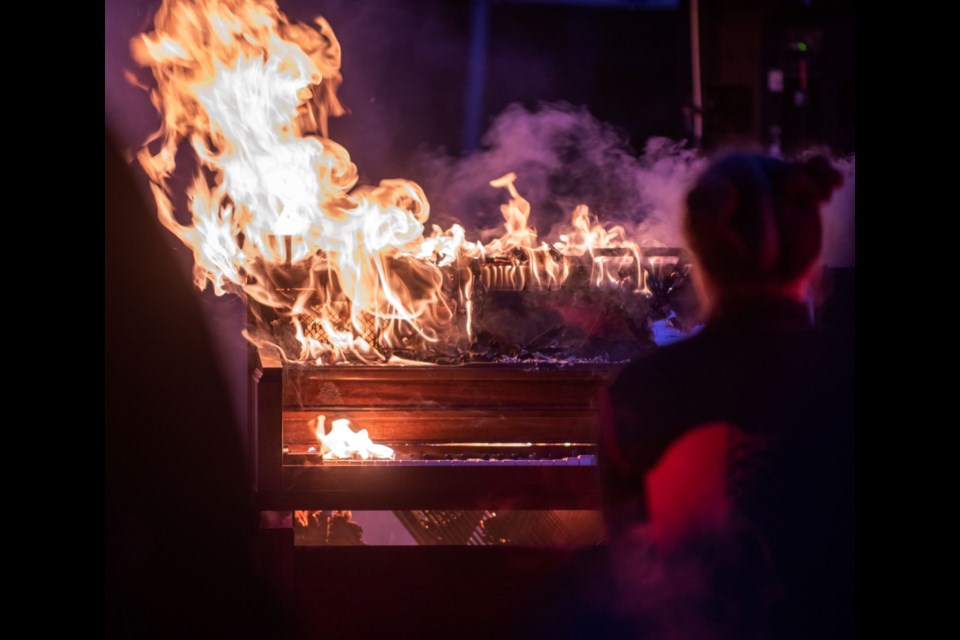
On the evening of Sunday, Oct. 24, a piano was set on fire as a woman in a red (fire-proof) gown played two new songs.

This was a piece of transdisciplinary art, though a piece with plenty of ceremonial aspects, involving sound and visual pieces.

Rachel Kiyo Iwaasa, the pianist, was performing a local version of Piano Burning put on by the Queer Arts Festival (QAF) and Full Circle: First Nations Performance. Originally conceived of in 1968 by avant-garde composer Annea Lockwood, the local version carried extra meaning given the current state of the world, location, and participants, says SD Holman, the founding artistic director emeritus at the QAF.

A central theme has to do with the involvement of Indigenous peoples in the performance. Among other parts, there was a four directions dance preceding the piano performance, and the original songs played as the piano was lit on fire were created by local composer and member of the Lil’wat Nation Russell Wallace.

Piano Burning, in this context, resembled a fire ceremony. Fire ceremonies were a part of Coast Salish culture banned by the federal government along with potlatches.

“The music, the dance and all the ritualistic aspects of things were basically performed not openly in the community,” Wallace says. “Back in the 40s when the songs were coming back out, my mom was part of that movement of bringing the music back to the community.”

Through the flames items are sent to ancestors and those who’ve passed. For Holman it was a way to send music to their wife. For Wallace the ceremonial impact of his work didn’t hit until the piano his songs were being played and the piano was burning.

“I wrote it with the intention of sending music up to my parents who were both very supportive of me being involved in music,” he tells Vancouver is Awesome. “I had a moment there I was like, ‘Wow, this is kind of heavy with meaning.'”

Part of that weighty moment comes from the fact it was held in a cemetery. Holman notes another layer of the piece has to do with the fact a piano is an item from European and colonial cultures, while it was burned in a fire ceremony with many Indigenous aspects involved.

“Europeans burn things in effigy, it’s a violent concept,” she notes. “Indigenous people burn not what’s despised, but what’s cherished.”

Another aspect is an environmental statement, since the wooden object burns; the fact the performance had to be delayed due to the fire ban over the summer only adds to that. Additionally, there are the recent headlines about residential schools in Canada, a part of history that’s only recently been seeing more light.

“We have to learn to reconcile the difference between what we’re taught and the history we can no longer deny with all the residential schools,” Holman says.

Central to all the layers is the transformative nature of fire.

“It’s this beautiful thing; how we’re directly witnessing matter change to energy, just as we transform from matter to energy when we die,” says Holman.

Wallace wrote two pieces of music just to be played as the piano was destroyed. In both cases he leaned on Coast Salish styles to inform the songs.

“Being a knitter, I’ve knitted before, and patterns, repeating patterns, slightly altering them to create designs are important,” he says. “That was the idea of the compositions. Repetition with slight changes to create a design.”

Since he’d never written for piano before Iwaasa, the pianist in the flame retardant gown (and co-founder of QAF), helped. She had actually approached Wallace in the first place about creating the music.

While the music was central to the performance, Wallace notes the visual of the piano was interesting.

“Once it got darker and the piano was ablaze it was really visually striking and kind of felt like a big bon fire,” he says.

For those upset at the idea of a piano being destroyed, Holman notes it was donated after a long life of being used and recycled throughout the community. She also notes it was “not really a viable piano” anymore. Wallace says that the first thing to go on it, after it was set alight was the tuning (it was a cool day and fire is hot).

Postponed Piano Burning finally ignites on October 24 at Mountain View Cemetery

BY JANET SMITH, STIR VANCOUVER

The Queer Arts Festival and the Talking Stick Festival present Piano Burning on October 24 at 5 pm at Mountain View Cemetery

IT’S A PERFORMANCE that refuses to be extinguished.

After seeing postponement due to fire bans on August 8 during the Queer Arts Festival, Piano Burning is now ready to ignite again. As we reported then, the outdoor performance at Mountain View Cemetery will feature Rachel Kiyo Iwaasa sporting a (fireproof) gown designed by Evan Ducharme and literally lighting her piano on fire. The highly symbolic performance will debut a new piece by composer Russell Wallace.

SD Holman and Margo Kane, artistic director of Full Circle: First Nations Performance, have put a new twist on Annea Lockwood’s notorious work, written in 1968 and directing the performer to soak paper in lighter fluid, set it alight, and drop it into a piano that is beyond repair. The Vancouver duo has re-envisioned the entire act through the lens of historically banned First Nations fire ceremonies and the global warming crisis.

They’ve grounded this event in cultural knowledge and a focus on Two-Spirit artists, including Sempúlyan, who will speak about the spiritual role of fire to communicate with ancestors, and Squamish Nation councillor Orene Askew (better known as DJ O Show), who will set the piano alight.

In August, Holman wrote a letter explaining the reasons for the postponement and for the provocative transdisciplinary performance itself; you can read it here. And brush up on much more background on Piano Burning itself, with info here from when Stir previewed it in August.

Piano Burning

Sun Oct 24 | 5pm

Transdisciplinary music performance | Mountain View Cemetery

Rising from the ashes of this summer’s fire ban, QAF and Full Circle: First Nations Performance will reignite our Piano Burning event on Sunday, October 24 at Mountain View Cemetery. Curated by SD Holman and Margo Kane, Annea Lockwood’s infamous work — where QAF veteran Rachel Kiyo Iwaasa performs a piano as it burns to ashes — is re-envisioned through the lens of historically banned First Nations fire ceremonies and contemporary global warming of unprecedented levels.

Margo Kane and Full Circle: First Nations Performance ground this event with cultural knowledge and a focus on Two-Spirit artists: Sempúlyan, who will speak about the spiritual role of fire to communicate with ancestors; Russell Wallace, who has composed a new piece for the occasion; designer Evan Ducharme, who created Iwaasa’s fire-proof ball gown; and Squamish Nation councillor Orene Askew (aka DJ O Show), who will set the piano alight.

Bring a chair, bring a blanket, and dress for the weather!

Watch artists Rachel Kiyo Iwaasa & Evan Ducharme talk about their collaboration in Piano Burning, from our QAF 2021 interview series Studio (ob)Sessions:

Workshop: Gathering of Wishes and 1000 Paper Butterflies

Mass Reincarnation of Wish Fragments

Mark Takeshi McGregor will succeed SD Holman as artistic director of Vancouver’s Queer Arts Festival

by Charlie Smith, Georgia Straight on August 16th, 2021

One of Vancouver’s most influential queer arts administrators is going to take a well-deserved respite.

SD Holman cofounded the Queer Arts Festival 14 years ago and in 2018, founded SUM, which is the festival’s year-round programming arm.

At the close of this year’s Queer Arts Festival on August 13, Holman publicly announced that this would be the last under their direction. Holman, who served as executive and artistic director, is a self-described gender anarchist who uses a mix of pronouns.

I’m proud of the artistic triumphs we’ve achieved together,” Holman said in a statement, “including Jonathan D. Katz’s Drama Queer curation; the 25th-anniversary reunion of the notorious Kiss & Tell collective; Jeremy Dutcher’s first full-length Vancouver concert; UnSettled, the world’s first entirely Two-Spirit-curated festival; the commissioning and the world premiere of When the Sun Comes Out by Leslie Uyeda and Rachel Rose, Canada’s first lesbian opera; and co-producing the multi-award-winning world premiere of Lesley Ewen’s play Camera Obscura (hungry ghosts).”

Holman’s replacement as artistic director is Mark Takeshi McGregor, a former executive director of the Powell Street Festival as well as an acclaimed flutist. He begins in this new position on October 1.

“As a musician and visual artist, I’ve enjoyed close ties with this organization for over fifteen years and I’ve witnessed firsthand how it has grown and evolved,” he said. “None of this would have been possible without the passion and tenacity of SD Holman, who leaves us with an inspiring legacy of queer arts and culture… and massive shoes to fill! I’m looking forward to working with our incredible staff, board of directors, volunteers, and community to continue challenging norms, breaking barriers, and inspiring discourse.”

Holman was born in Hollywood and graduated from Emily Carr University of Art + Design in 1990. Holman’s work as an artist and curator has addressed themes of sex, death, and identity, according to a Queer Arts Festival profile.

In a 2018 article written for the Straight by queer journalist V.S. Wells, Holman conceded that they didn’t expect everyone to like or even understand the Queer Arts Festival.

In a column on Straight.com two years earlier, Holman wrote about the violence that has been inflicted on queer people simply as a result of their gender expression, gender identity, or sexual orientation.

It came in the wake of an attack on an LGBT+ nightclub in Orlando, Florida.

“So many of us have stories of violence done to us. I am thinking of the man that came with a gun to my house in Rock Creek to shoot me, a story I have never told, until now—what’s yours?” Holman wrote. 

“My heart goes out to the families, chosen and biological, of the dead and wounded. We are going to be grieving for a very long time. Hate cannot bring an end to hate—only love can.” 

On a lighter note, Holman, along with Fay Ness and Stephanie Goodwin, came up with the idea of calling 2018 the “Year of the Queer” in Vancouver.

It coincided with 15 Vancouver LGBT organizations celebrating milestone achievements.

One of those was the Queer Arts Festival, which was then approaching its 10th anniversary.

This change at the Queer Arts Festival follows a series of changes in leadership at a few other locally based queer organizations, including Vancouver Pride, Rainbow Refugee, and Health Initiative for Men. 

Mark Takeshi McGregor takes helm of Pride In Art Society as SD Holman steps down

BY JANET SMITH, STIR VANCOUVER

THE PRIDE IN Art Society board has announced that SD Holman is stepping down from its helm after 14 years.

Musician Mark Takeshi McGregor will take on the role as artistic director of the multidisciplinary queer arts organization. Holman announced the exit on August 13 at the closing party of the 2021 Queer Arts Festival, which Pride in Art has run online and in person for the last few weeks.

Holman cofounded the Queer Arts Festival, and then later, in 2018, established SUM, QAF’s year-round programming arm and Canada’s only queer-mandated gallery. (Pride In Art began in 1998 as a collective of LGBT visual artists mounting a community art exhibition.)

“I’m proud of the artistic triumphs we’ve achieved together,” Holman said in the announcement yesterday, “including Jonathan D. Katz’s Drama Queer curation; the 25th-anniversary reunion of the notorious Kiss & Tell collective; Jeremy Dutcher’s first full-length Vancouver concert; UnSettled, the world’s first entirely Two-Spirit-curated festival; the commissioning and world premiere of When the Sun Comes Out by Leslie Uyeda and Rachel Rose, Canada’s first lesbian opera; and co-producing the multi-award-winning world premiere of Lesley Ewen’s play Camera Obscura (hungry ghosts).”

SD will continue as founding artistic director emeritus. 

Internationally acclaimed flute innovator and former Powell Street Festival artistic director McGregor said he was “thrilled” to join the Pride in Art family.

 “As a musician and visual artist, I’ve enjoyed close ties with this organization for over 15 years and I’ve witnessed firsthand how it has grown and evolved,” he said in the press statement. “None of this would have been possible without the passion and tenacity of SD Holman, who leaves us with an inspiring legacy of queer arts and culture… and massive shoes to fill! I’m looking forward to working with our incredible staff, board of directors, volunteers, and community to continue challenging norms, breaking barriers, and inspiring discourse.”

Holman returns to the studio to resume full-time artistic practice, remaining available to the organization for mentorship and organizational history. 

“As QAF and SUM grow and evolve, my hope is that the organization will stay Avant-Garde and Contemporary,” Holman added in the statement. “Life is short and art is long–or as the Guerrilla Girls say, it’s not a sprint, it’s a marathon. This work is a relay, and it’s time to pass the torch. I am delighted to be leaving the organization in inspired and capable hands.”  

Share